
From Black and White to Color
A Man Called OveThis thread follows the contrast between Ove’s ordered, monochrome view of life and the relationships that gradually restore color to his world.
increasing Bearing strength in each event
 decreasing
Bearing strength in each eventdecreasingA World of Clear Lines
A World of Clear Lines
Numbers and tangible things
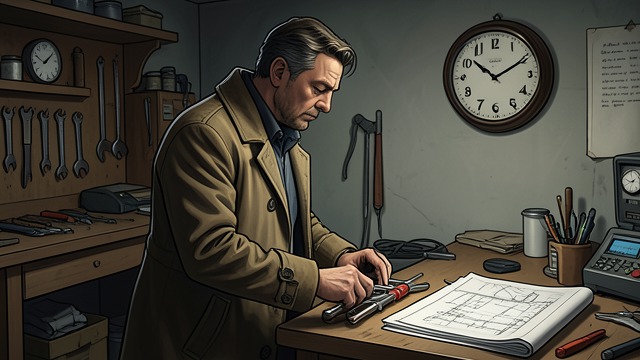
Before meeting Sonja, Ove finds comfort in mathematics, engines, tools, and work whose results can be seen and tested. He trusts objects that obey their construction and tasks with a clear right way to be done.
His mother’s death and then the death of Ove’s father leave little room for reflection or emotional language. Routine and practical work become the stable terms in which he can continue living.
The monochrome self
Ove describes himself as a man of black and white, a person who prefers certainty to ambiguity. The phrase captures both his genuine integrity and his difficulty accommodating motives that cannot be measured or classified.
That outlook does not mean he lacks feeling. Rather, his emotional life has few forms of expression beyond loyalty, work, and the things he can repair.
Sonja Brings Color
Sonja Brings Color
An unexpected encounter
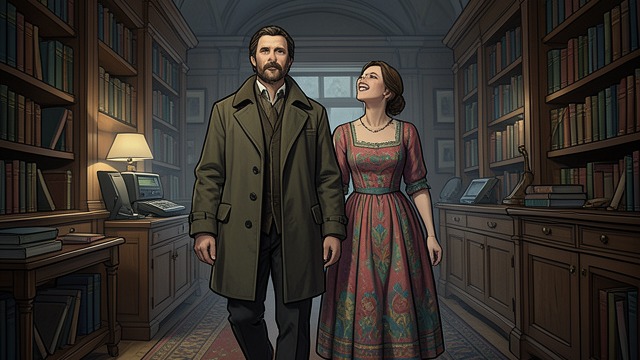
Ove is supposed to travel home after his railway shift, but boards the train going the other way when he sees Sonja. Her books, conversation, and laughter draw him into a world he has not learned to inhabit, though he wants to hear her for the rest of his life.
Their courtship grows through repeated journeys and eventually a dinner at which Ove admits that he lied about military service. Sonja responds not by dismissing him but by asking what he actually wants to do with his life.
A different future
Sonja sees possibility in Ove’s interest in building, encouraging him to study and pursue work that fits his abilities. He discovers that his practical nature can be a foundation for a wider life rather than a boundary around it.
The novel’s image of Sonja as color does not suggest that she erases Ove’s character. Her presence makes his existing loyalties and capacities visible in a warmer, less isolated form.
Color Survives the Accident
Color Survives the Accident
A shared catastrophe
On the journey home from Spain, a drunk driver causes a bus crash that kills the child Sonja is carrying and leaves her permanently disabled. Ove remembers his own helplessness in the wreck and carries the guilt as though he should have been able to prevent it.
When Sonja wakes after ten days, she chooses physiotherapy and insists that they must move on. Her insistence does not undo the loss; it gives both of them a way to live alongside it.
Love made practical
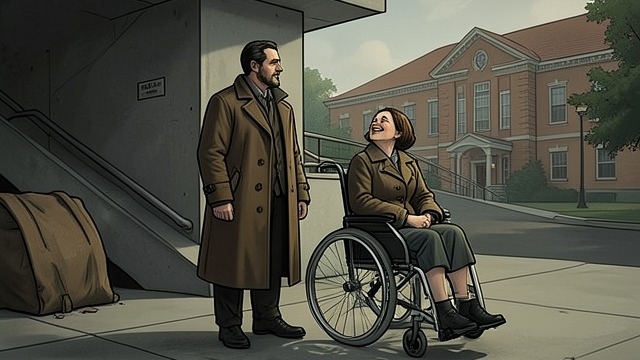
Ove rebuilds their home for Sonja’s wheelchair, changes the kitchen, and constructs a ramp at the school where she teaches. These acts translate his devotion into forms the world cannot dismiss as mere sentiment.
Sonja continues to bring color into other people’s lives by teaching pupils whom others have given up on. Ove’s labor supports her work, showing that their differences become complementary rather than divisive.
The Drawing in Color
The Drawing in Color
A child’s image of Ove
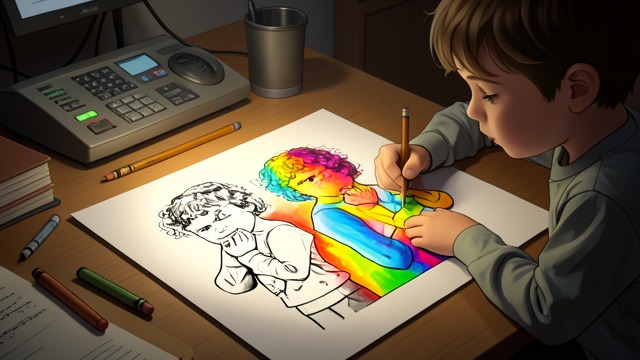
After Ove gives Parvaneh’s family a ride, Nasanin’s drawing reaches him through Parvaneh. Most figures are drawn in black, while the figure representing Ove is filled with a riot of colors.
Parvaneh explains that Nasanin always draws Ove that way because he is the funniest thing she knows. The child’s judgment unsettles Ove, who has spent a lifetime imagining himself as severe and difficult to approach.
A legacy made visible
The drawing echoes Sonja’s role in seeing warmth beneath Ove’s guarded surface. It also shows that this capacity is no longer confined to the marriage he has lost; children and neighbors now recognize it directly.
Ove keeps the drawing, and later gives Nasanin’s older sister an iPad for her art. The color associated with Sonja has become something Ove can help create and pass on.
Color After Loss
Color After Loss
The return of other lives
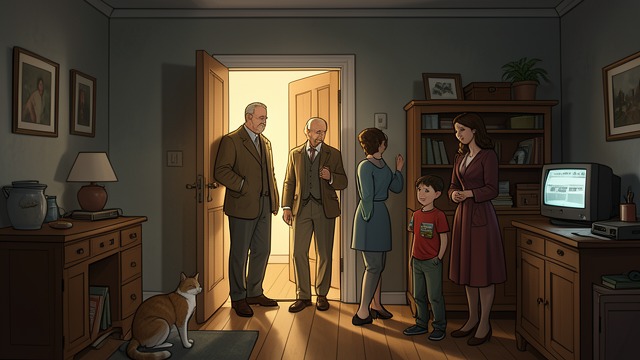
Ove begins by resisting every new connection, but repeated interruptions bring people into the home he has kept as a shrine to Sonja. The cat, Parvaneh’s family, Jimmy, Mirsad, and Adrian enter through crises that require food, shelter, repair, or transport.
Their presence does not replace Sonja. Instead, they make the rooms and routines of Ove’s life answerable to the present again, giving him people to worry about and practical things to do.
An enlarged inheritance
Ove’s final gift to Nasanin’s sister affirms her ability to draw and gives her a tool for making images of her own. His care extends beyond the people who first pulled him back into neighborhood life.
The story’s movement from black and white to color is therefore not a conversion from severity to cheerfulness. It is the gradual discovery that love can continue to take new forms after the person who first awakened it is gone.
Ove’s childhood and early adulthood
Ove’s first train journey beside Sonja
After the bus crash in Spain
After Ove drives the family home from the hospital
In the years after Ove’s failed suicide attempts
